
August 25, 2026
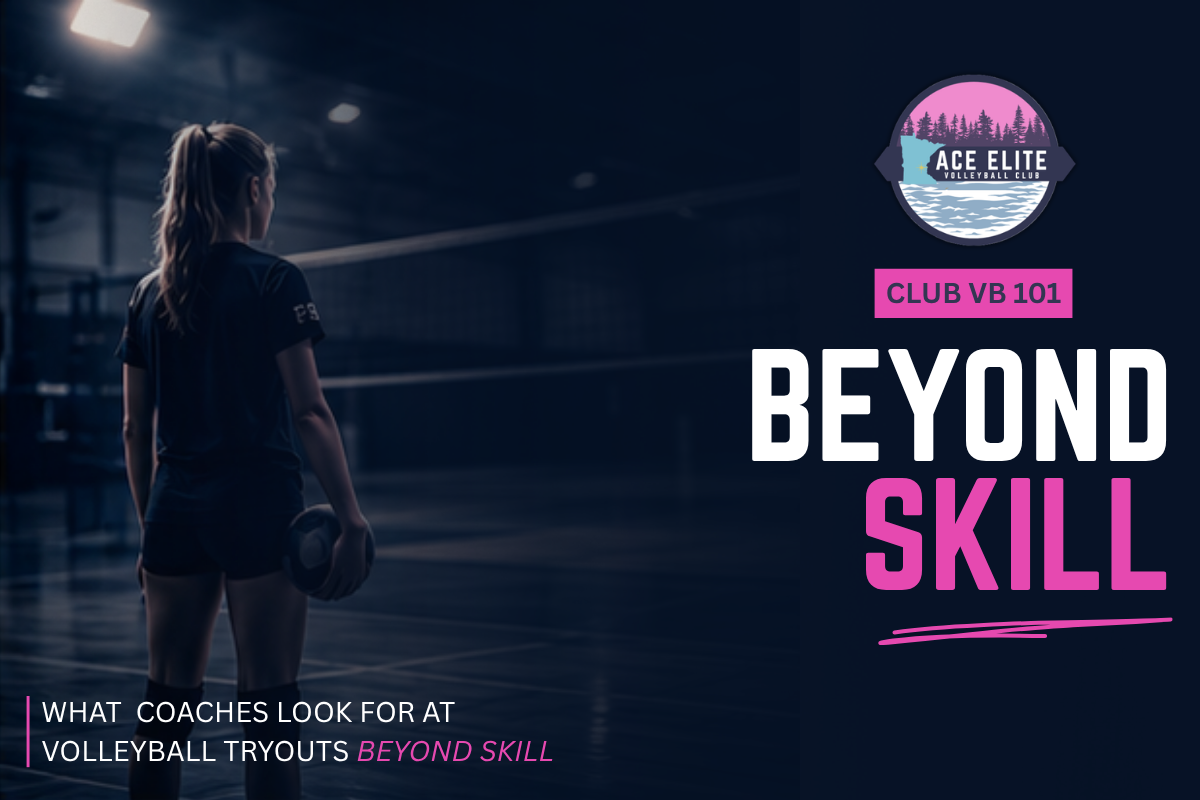
What Coaches Look for at Volleyball Tryouts Beyond Skill
This is the text area for this paragraph. Once you've added your content, you can customize its design by using different colors, fonts, font sizes and bullets.
Great volleyball skills matter, but coaches are evaluating more than your contacts.
Here are 10 things coaches may notice about you during tryouts.
When athletes think about volleyball tryouts, they tend to think about skills.
How well did I pass?
Did I make my serves?
Did I get enough good swings?
Did the coaches see that block?
And yes, coaches are evaluating volleyball ability. Technical skills, athleticism, position, experience, and volleyball IQ all matter when building teams.
But coaches are also paying attention to something athletes sometimes overlook:
Everything happening between the contacts.
How do you respond after making a mistake?
Do you communicate?
Do you compete when you're tired?
What happens when a coach corrects you?
How do you treat the athletes around you?
What does your body language say when things aren't going your way?
A tryout isn't simply an evaluation of what you can do with a volleyball.
It's an opportunity for coaches to learn who you are as an athlete and teammate.
Here are some of the things coaches may be watching beyond volleyball skill.
1. Effort
Effort sounds obvious.
But during a tryout, it can tell coaches quite a bit.
Do you pursue a ball that's heading out of bounds?
Do you transition every time?
Do you move quickly between drills?
Do you continue working when you're tired?
Or does your effort depend on whether you think a coach is watching?
Coaches understand that athletes have different skill levels. Effort is something every athlete can control.
Sometimes the most revealing play at a tryout isn't the perfect kill.
It's the athlete who chases a ball everyone else assumed was dead.
What coaches notice:
- Hustle
- Pursuit
- Transition effort
- Work ethic
- Consistency
- Effort when a drill isn't going your way
Tryout reminder: Don't save your effort for the highlight plays.
2. Communication
Volleyball is a communication-heavy sport.
Athletes have to constantly share information with teammates.
Calling the ball.
Identifying hitters.
Helping with seams.
Communicating during serve receive.
Calling tips.
Encouraging teammates.
Celebrating points.
Resetting after mistakes.
You don't have to be the loudest athlete in the gym. In fact, yelling simply for the sake of being loud isn't particularly useful.
Coaches are looking for purposeful communication.
Does your voice help your team play better?
What coaches notice:
- Calling the ball
- Communicating during play
- Helping teammates
- Providing useful information
- Encouraging others
- Staying engaged even when you're not contacting the ball
The ball may only touch you for a fraction of each rally.
You can still contribute to every point.
3. Coachability
This is a big one.
An athlete makes a mistake.
A coach walks over and offers feedback.
What happens next?
Does the athlete listen?
Make eye contact?
Ask a question if she doesn't understand?
Try the correction?
Or immediately explain why the mistake happened?
Coaches don't expect athletes to arrive knowing everything.
That's why they're called coaches.
What matters is whether an athlete is willing and able to receive information and apply it.
One of the best opportunities to demonstrate coachability happens immediately after receiving feedback.
What coaches notice:
Can you make an adjustment on the next repetition?
It doesn't even have to be perfect.
The willingness to try tells a coach:
I can teach this athlete.
And that's powerful.
4. Body Language
Athletes communicate even when they aren't speaking.
Shoulders drop.
Eyes roll.
Arms cross.
An athlete turns away from teammates.
Or...
She resets.
Makes eye contact.
Claps for a teammate.
Gets back into position.
Body language becomes especially noticeable after something goes wrong.
And something will go wrong during tryouts.
That's volleyball.
Coaches aren't expecting athletes to celebrate mistakes. Frustration is normal.
What they're watching is how athletes manage it.
Ask yourself:
What does my body language tell my teammates after I make a mistake?
Because your teammates can feel it, too.
5. How You Respond to Mistakes
You shank a pass.
Miss a serve.
Hit into the net.
Get blocked.
Set the wrong hitter.
Lose track of the rotation.
Welcome to volleyball.
Even elite athletes make mistakes constantly.
A coach isn't only evaluating the mistake.
They're evaluating the response.
Does one mistake become three because you're still thinking about the first one?
Or can you reset quickly?
A simple phrase can help:
Next Ball.
The last point is over.
You cannot replay it.
But you have complete control over how you approach the next one.
That ability to reset is valuable at tryouts, and even more valuable during a season.
6. Competitiveness
Being competitive doesn't mean screaming after every point or trying to crush every volleyball into the floor.
Competitiveness often looks much quieter.
Wanting another opportunity after making a mistake.
Fighting to keep a rally alive.
Staying focused when your team is losing.
Finding another gear when you're tired.
Wanting the ball when the score gets uncomfortable.
Coaches notice athletes who stay engaged when things get difficult.
Anyone can look confident when everything is working.
Competition reveals what happens when it isn't.
7. Teamwork
Tryouts can feel individual.
Everyone wants to perform well. Everyone knows they're being evaluated.
That can tempt athletes to focus entirely on themselves.
But coaches aren't selecting twelve individuals.
They're building a team.
That means they're paying attention to how athletes interact.
Do you celebrate someone else's great swing?
Do you communicate with athletes you've never met?
Do you help someone understand a drill?
Do you become frustrated when another athlete makes a mistake?
Do you make the people around you better?
A great teammate doesn't disappear just because someone else is having success.
Remember:
You don't have to know someone's name to be a good teammate to them.
8. Focus
Tryouts move quickly.
Coaches explain drills, divide athletes into groups, change rotations, introduce scoring systems, and move players between courts.
An athlete who listens well makes everything easier.
When a coach is explaining something:
Stop touching the volleyball.
Make eye contact.
Listen.
Know where you're supposed to go.
Be ready when it's your turn.
Coaches notice athletes who can absorb information and stay engaged.
They also notice when they have to explain the same thing to one athlete three times because she wasn't listening the first two.
9. Volleyball IQ
Volleyball IQ isn't the same thing as technical skill.
It is your ability to understand what's happening in the game.
Can you read the court?
Recognize open space?
Adjust defensively?
Understand where the setter is?
Make smart decisions when you're out of system?
Recognize what the opponent is doing?
Some of this comes with experience, and younger athletes are still developing it.
Coaches don't necessarily expect athletes to know everything.
But they may notice athletes who are beginning to see the game rather than simply react to the ball.
10. How You Treat People
This one extends beyond the court.
How do you interact with coaches?
Other athletes?
Evaluators?
People helping with check-in?
Athletes you don't know?
Character doesn't suddenly turn on when six-on-six begins.
The way an athlete carries herself throughout the entire tryout can tell coaches something about the teammate she may become over a five- or six-month season.
Skill matters.
So does being someone others want beside them when the match gets difficult.
What Coaches Aren't Expecting
Here's something athletes should hear before tryout day:
We aren't expecting perfection.
You don't need to make every serve.
You don't need to crush every swing.
You don't need to have the best tryout of your life.
You don't need to pretend you're confident every second.
You don't need to become someone you're not.
Coaches know you're nervous.
They know you're being evaluated.
They know you're playing with unfamiliar athletes.
And they know mistakes are part of volleyball.
Instead of trying to create a perfect tryout, focus on showing coaches things you can control.
Control the Controllables
You cannot control:
- Who else attends tryouts
- How tall another athlete is
- Another player's experience
- What position the team needs
- How someone else performs
- Which court you're assigned to
- Every decision a coach ultimately makes
But you can control:
- Your effort
- Your communication
- Your attitude
- Your preparation
- Your body language
- Your response to feedback
- How you treat teammates
- How quickly you reset
- How hard you compete
That's a much better place to put your energy.
Skill Gets Noticed. So Does Everything Else.
Volleyball ability matters at tryouts.
It should.
But coaches aren't simply trying to identify athletes who can pass, set, serve, block, or attack.
They're trying to build teams.
And teams need athletes who compete, communicate, learn, respond, support one another, and continue growing throughout a season.
So when you walk into your next tryout, don't spend the entire time wondering:
“Are the coaches watching me?”
Assume they are.
Then stop worrying about it.
Play volleyball.
Compete.
Communicate.
Listen.
Respond.
Be a great teammate.
And when something goes wrong?
Next ball.
Preparing for Club Tryouts?
Knowing what coaches evaluate is only one part of being prepared.
Read our complete guide to learn what to bring, what happens during evaluations, how team selection works, and what athletes and parents can expect throughout the tryout process.